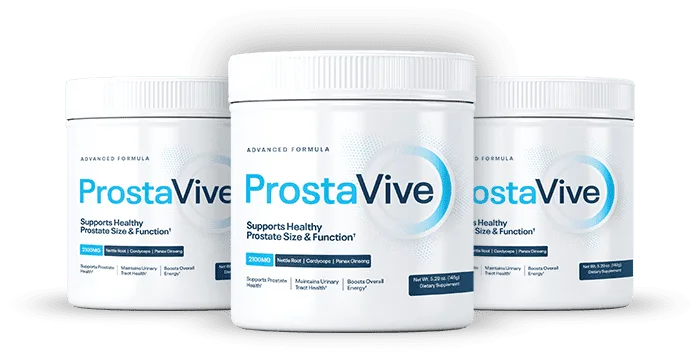
ProstaVive's possible side effects have to be read ingredient by ingredient. Some medicines are worth a pharmacist check, and some urinary warning signs need a doctor whatever you decide about the powder. For price and refund terms, see the ProstaVive overview.
Is ProstaVive safe to take?
For many healthy men the label doses look modest, but nobody has tested ProstaVive itself for safety. The vendor's 34 references include no study of the product,[20] and the label carries one ingredient that men with hormone-sensitive prostate cancer are told to avoid.[3]
| Safety study of ProstaVive itself | None published[20] |
|---|---|
| Daily serving | 1 scoop of powder, about 4.93 g[1] |
| Doses on the label | Listed for every ingredient; only the split inside a 200 mg fruit and vegetable blend is hidden[1] |
| Biggest single warning | Ashwagandha (250 mg): avoid with hormone-sensitive prostate cancer[3] |
| Nutrient closest to a limit | Vitamin B6, 10 mg against the EU adult limit of 12 mg a day[10][11] |
| Main interaction signals | Diabetes, blood pressure, thyroid, immune, sedative and seizure drugs; blood thinners; two antibiotic families[3][7][12] |
| Allergens | Vendor says none known; NCCIH says fenugreek can cause serious allergic reactions[1][6] |
| FDA adverse event reports and recalls | None found for ProstaVive, searched October 2, 2026[17][23] |
| FDA review before sale | Not required for supplements[3] |
The vendor calls ProstaVive "safe for most individuals" and "generally well-tolerated", and says it "should be compatible with other supplements without any problems or adverse effects".[1][2] It publishes no data behind those lines.
What side effects can ProstaVive cause?
None have been published for ProstaVive itself, so the answer comes from its ingredients: stomach upset, poor sleep, lower blood sugar and, rarely, allergic or liver reactions.[3][6][7]
Stomach and digestion
NCCIH lists diarrhea and nausea for fenugreek, and drowsiness, stomach upset, diarrhea and vomiting for ashwagandha.[6][3] One scoop has 500 mg of fenugreek seed powder and 250 mg of ashwagandha extract.[1]
Sleep
Insomnia is the most common side effect of Asian ginseng, according to NCCIH.[7] The vendor says ProstaVive "is not a stimulant", a claim nobody has tested.[1] Each scoop has 50 mg of Panax ginseng extract.
Blood sugar
NCCIH says large doses of fenugreek "may cause a harmful drop in blood sugar", and that ginseng "might lower blood sugar levels".[6][7] That matters most if you take diabetes medicine.
Allergy and skin
The vendor says ProstaVive "contains no known allergens".[1] NCCIH disagrees on one ingredient: fenugreek "can cause allergic reactions, including serious reactions". It also lists rare severe rash and allergic reactions with ginseng.[6][7]
Liver
NCCIH lists rare liver injury with ashwagandha and rare liver damage with ginseng.[3][7] A case series described five people who developed jaundice 2 to 12 weeks after starting ashwagandha products.[5]
Which ProstaVive ingredients raise the most safety questions?
Ashwagandha raises the most, followed by fenugreek, Panax ginseng and tongkat ali. Stinging nettle root, the one ingredient with prostate trials, has a very low reported risk.[9] Our sources held no safety data for the maca (250 mg) or artichoke (300 mg). Our guide to what each ProstaVive ingredient is and does covers the benefit side.
| Ingredient (per scoop) | Known side effects | Caution or interaction | What is missing |
|---|---|---|---|
| Ashwagandha root extract, 250 mg | Drowsiness, stomach upset, diarrhea, vomiting; rare liver injury[3] | Avoid with hormone-sensitive prostate cancer, before surgery, and with autoimmune or thyroid disorders; several drug classes. Denmark banned it in 2023[3][4] | Safety beyond 3 months[3] |
| Fenugreek seed powder, 500 mg | Diarrhea, nausea; serious allergic reactions possible[6] | Large doses can drop blood sugar; not safe in pregnancy above food amounts[6] | No prostate safety data |
| Panax ginseng extract, 50 mg | Insomnia most common; rare severe rash, liver damage, allergy[7] | May interfere with blood clotting, worsen autoimmune disorders, lower blood sugar[7] | Ginsenoside content not stated[1] |
| Tongkat ali 100:1 extract, 100 mg | Not covered by our sources | Mercury found in 26 of 100 tested products[8] | No NCCIH page; source and testing not disclosed |
| Stinging nettle root extract, 200 mg | Adverse event risk "very low" in a review[9] | None documented in our sources | Extract ratio not stated[1] |
| Cordyceps powder, 250 mg | Not covered by our sources | Given with cyclosporine in transplant studies; interaction not assessed[21] | Species and part not stated[1] |
| Vitamins and minerals | See the B6 section below | Stacking with other products[12] | Whether boron is elemental weight[1] |
Why should men with prostate cancer be careful with ProstaVive?
Because ProstaVive contains 250 mg of ashwagandha, and NCCIH says: "Because ashwagandha may increase testosterone levels, people with hormone-sensitive prostate cancer should avoid its use."[3][1] That warning lands on exactly the group a prostate product is sold to.
If you have prostate cancer, or are being checked for it, do not start ProstaVive without asking your oncologist or urologist. The ashwagandha warning comes from the National Institutes of Health, not from us.[3]
Two more ingredients are sold on hormone effects. A meta-analysis of five trials found tongkat ali raised testosterone, though its authors said more research is required.[24] Fenugreek's effect was small and of very low certainty in a 2026 meta-analysis.[25]
No source we read warns about these two in prostate cancer. We flag them because they share ashwagandha's claimed mechanism, so the whole label is worth showing to your cancer team.
Which medicines could interact with ProstaVive?
No study has tested ProstaVive with any medicine. NIH sources flag interactions for three of its ingredients, and a fourth raises a question for transplant drugs.[3][7][12][21]
Medicine groups worth a pharmacist review
- Diabetes medicines. NCCIH says ashwagandha may interact with them, and that fenugreek and ginseng can lower blood sugar.[3][6][7]
- Blood thinners. NCCIH says ginseng may "interfere with blood clotting".[7]
- Blood pressure, thyroid, immunosuppressant, sedative and anticonvulsant drugs. NCCIH lists each as a possible ashwagandha interaction.[3]
- Quinolone and tetracycline antibiotics. The Office of Dietary Supplements says zinc interacts with both. A scoop has 12 mg of zinc.[12][1]
- Cyclosporine and other transplant drugs. Cordyceps has been given with cyclosporine in Chinese transplant studies, but whether it changes drug levels was not assessed.[21]
Medicines that can worsen urinary symptoms on their own
NIDDK says over-the-counter cold and cough medicines (decongestants and antihistamines), tranquilizers, antidepressants and diuretics can make BPH symptoms worse.[16] If your symptoms shift, check whether one of these changed before you credit or blame the powder.
Do not drop a prescribed BPH medicine to try ProstaVive. NIDDK lists medicines, minimally invasive procedures and surgery as the options for BPH; supplements are not on that list.[16]
Is the vitamin B6 in ProstaVive too high?
Not on its own, but it leaves little room. One scoop has 10 mg of vitamin B6, 588% of the Daily Value.[1] The US upper limit is 100 mg a day, but in 2023 the European Food Safety Authority set an adult limit of 12 mg a day because of the risk of peripheral neuropathy, a form of nerve damage.[10][11]
That is 2 mg of headroom under the European figure before food or anything else. A multivitamin or B-complex taken alongside ProstaVive could take you past 12 mg.
The other nutrients sit well inside US limits per scoop: zinc 12 mg against 40 mg, vitamin D 2,000 IU against 4,000 IU, magnesium 50 mg against 350 mg from supplements, and boron 5 mg against 20 mg.[1][12][13][14][15]
Our guide on how to take ProstaVive shows how to add up your daily totals.
Is there a heavy-metal risk from the tongkat ali?
Possibly, and buyers cannot check it. In a study of 100 tongkat ali products sold in Malaysia, 26 contained 0.53 to 2.35 ppm of mercury, above the 0.5 ppm limit.[8] ProstaVive uses 100 mg of a 100:1 tongkat ali extract and does not say where it is sourced.[1]
The vendor says its ingredients are "tested for the highest purity and potency" and that ProstaVive is made in "an FDA-registered facility that follows the GMP" guidelines.[1] It names no lab, facility or certifier, and publishes no certificate of analysis.
That study did not test ProstaVive, so it gives you a reason to ask the vendor without proving a problem. You can email [email protected] and request a certificate of analysis that covers heavy metals for your batch.[1]
Where can you check the current ProstaVive terms?
If your doctor is comfortable with you trying it, the vendor's checkout shows the current price and the 180-day refund terms. We earn a commission if you buy through this link.
Is ProstaVive safe for women or during pregnancy?
It is not made for them, and three of its ingredients carry pregnancy warnings. The vendor pitches ProstaVive to men over 40, and its footer tells anyone pregnant or nursing to consult a physician before use.[22][1]
NCCIH says to avoid ashwagandha in pregnancy and breastfeeding, that fenugreek is "not safe for use during pregnancy in amounts greater than those found in food", and that ginseng may be unsafe in pregnancy.[3][6][7]
If your partner is pregnant, trying to conceive or breastfeeding, keep the tub as yours alone. A powder stirred into a shared smoothie or juice jug is easy to pass around.
Who should talk to a doctor before taking ProstaVive?
Any man with urinary symptoms that have not been checked should see a doctor first. NIDDK says the same symptoms can come from bladder problems, urinary tract infections, prostatitis or prostate cancer, and advises discussing any urinary symptoms with a health care professional.[16] These groups have the clearest reasons to ask:
- Men with prostate cancer, or being tested for it[3]
- Anyone taking diabetes medicine[3][6][7]
- Anyone on a blood thinner[7]
- Anyone on blood pressure, thyroid, immunosuppressant, sedative or anticonvulsant drugs[3]
- People with a thyroid or autoimmune condition[3][4][7]
- Anyone with surgery planned[3]
- Transplant patients[21]
- Anyone taking a quinolone or tetracycline antibiotic[12]
- Anyone with a history of serious allergic reactions[6]
- Men already taking a multivitamin, B-complex, zinc or vitamin D product[10][12][13]
Take the tub, or a photo of its Supplement Facts panel, and a list of everything else you take.
Which symptoms need medical care right away?
NIDDK lists four urinary warning signs that need a health care professional straight away, whether or not you take any supplement:
"Tell a health care professional right away if you cannot urinate at all; feel painful, frequent, and urgent needs to urinate, and have a fever and chills; have blood in your urine; feel great discomfort or pain in your lower abdomen or urinary tract."[16]
Stop the powder and get urgent care for signs of a serious reaction to an ingredient:
- Swelling of the face, lips or throat, or trouble breathing, since fenugreek can cause serious allergic reactions[6]
- Yellow skin or eyes, the sign seen in ashwagandha liver injury reports[5]
- A severe or spreading rash, rare with ginseng[7]
For trouble breathing, call 911. For milder problems such as stomach upset or poor sleep that last more than a few days, stop taking it and call your doctor.
How do you report a reaction to ProstaVive?
Stop taking it, get care if you need it, then tell your doctor so the reaction goes on your record. You can also report it to the FDA yourself by calling 800-FDA-1088 or using the FDA's online form, as the NIH Office of Dietary Supplements advises.[18]
Tell the seller too. The vendor lists [email protected] and (863) 591-4284 for product questions. Its home page calls that number toll-free, but 863 is a Florida area code. Order questions go to ClickBank, the retailer, at 1-800-390-6035.[1][2]
Keep the tub, your order email, your start date, any lot number and a note of each symptom with the day it began. That record helps your doctor, any FDA report and a refund request, which the vendor accepts within 180 days of the order date.[19]
How can you lower the risk if you try ProstaVive?
Get your symptoms checked first, clear the label with a pharmacist, start the powder on its own, and review it at three months. NCCIH describes ashwagandha as possibly safe when used for up to 3 months.[3]
Simple monitoring plan
- Before day one. See your doctor about any urinary symptoms. Show the Supplement Facts panel to your pharmacist. Add up zinc, vitamin B6 and vitamin D from every product you take.
- Week one. One scoop a day, as the label says, and nothing else new.[1] Note any stomach upset, poor sleep, rash or itching.
- Weeks two to twelve. Review your notes once a week. If you take diabetes medicine, follow your doctor's advice on checking blood sugar.[6][7] Watch for yellowing of the skin or eyes.[5]
- Around week twelve. Stop and decide with your doctor whether to continue. The refund window runs 180 days from the order date, so a decision at three months leaves time to send tubs back.[19]
Our look at whether ProstaVive works explains why the evidence for a benefit is limited.
What can we not claim about ProstaVive's safety?
We cannot say ProstaVive is safe for everyone, safe with your medicines or free of contaminants, because nobody has published that data. We also cannot confirm the vendor's manufacturing claims, because it names no facility, certifier or lab.[1]
We also found nothing alarming on record. openFDA searches on October 2, 2026 returned no recall and no adverse event report for ProstaVive.[17][23] Supplements are not approved by the FDA before they are sold, so an empty record is not a safety test.[3]
How this guide was prepared
We read the vendor's home, contact, refund and affiliate pages on October 2, 2026, and checked each ingredient against NCCIH, the NIH Office of Dietary Supplements, NIDDK and PubMed. We received no free product. Our scoring method is on the How We Review page.
What is the bottom line on ProstaVive side effects?
For a healthy man on no medicines, the label doses look modest, and stomach upset or poor sleep are the likeliest problems. The exceptions are hormone-sensitive prostate cancer, diabetes medicines, blood thinners, and stacking vitamin B6 with other products.
Whatever you decide, get urinary symptoms checked by a doctor, because a powder cannot tell an enlarged prostate from an infection or a cancer.[16]
Our verdict is mixed: an honest label, but most doses are below what studies used. For wider context, see our prostate health guides.
Want to check the current price and refund terms yourself? See the ProstaVive vendor checkout.
Back to the full ProstaVive overview.
Frequently asked questions
What are the most common ProstaVive side effects?
None have been published for ProstaVive itself. Its ingredients are linked mainly to stomach upset, diarrhea and nausea (fenugreek, ashwagandha) and insomnia (ginseng). Rarer problems include serious allergic reactions to fenugreek and liver injury reported with ashwagandha.
Is ProstaVive safe for men with prostate cancer?
Ask your oncologist first. ProstaVive contains 250 mg of ashwagandha, and NCCIH says people with hormone-sensitive prostate cancer should avoid ashwagandha because it may increase testosterone. Tongkat ali and fenugreek are also studied for testosterone effects.
Can ProstaVive interact with my medicines?
It has not been tested with any medicine. Ingredient sources flag diabetes, blood pressure, thyroid, immunosuppressant, sedative and anticonvulsant drugs, blood thinners, and quinolone or tetracycline antibiotics. Show the full label to your pharmacist before you start.
Is the vitamin B6 in ProstaVive a problem?
On its own, no. One scoop has 10 mg, well under the US limit of 100 mg a day but close to the 12 mg adult limit set in Europe in 2023. A multivitamin or B-complex on top could take you over that figure.
Does ProstaVive contain allergens?
The vendor says it contains no known allergens. NCCIH says fenugreek, which ProstaVive contains at 500 mg per scoop, can cause allergic reactions, including serious ones. Stop it and get urgent help for swelling of the face or throat, or trouble breathing.
Should I stop my BPH medicine to take ProstaVive?
No. NIDDK lists medicines, minimally invasive procedures and surgery as the options for BPH, and supplements are not among them. Keep your prescription unless your doctor changes it, and tell them before adding ProstaVive.
Sources
- ProstaVive contact page: Supplement Facts, directions, FAQ and support details. ProstaVive vendor site, undated (read October 2, 2026).
- ProstaVive home page: ingredients, FAQ and prices. ProstaVive vendor site, undated (read October 2, 2026).
- Ashwagandha. National Center for Complementary and Integrative Health, March 2023 (read October 2, 2026).
- Ashwagandha, health professional fact sheet (archived copy, September 2026). NIH Office of Dietary Supplements, updated May 2, 2025 (read October 2, 2026).
- Case series of five patients with liver injury after ashwagandha products. PubMed, US National Library of Medicine (read October 2, 2026).
- Fenugreek. National Center for Complementary and Integrative Health, February 2025 (read October 2, 2026).
- Asian Ginseng. National Center for Complementary and Integrative Health, February 2025 (read October 2, 2026).
- Mercury content of 100 tongkat ali products sold in Malaysia. PubMed, US National Library of Medicine (read October 2, 2026).
- Chrubasik et al.: review of stinging nettle root for benign prostatic hyperplasia. PubMed, US National Library of Medicine, 2007 (read October 2, 2026).
- Vitamin B6, health professional fact sheet (archived copy, September 29, 2026). NIH Office of Dietary Supplements, updated June 16, 2023 (read October 2, 2026).
- EFSA scientific opinion on the tolerable upper intake level for vitamin B6. PubMed, US National Library of Medicine, 2023 (read October 2, 2026).
- Zinc, health professional fact sheet (archived copy, September 30, 2026). NIH Office of Dietary Supplements, updated January 6, 2026 (read October 2, 2026).
- Vitamin D, health professional fact sheet (archived copy, September 29, 2026). NIH Office of Dietary Supplements, updated June 27, 2025 (read October 2, 2026).
- Magnesium, health professional fact sheet (archived copy, September 29, 2026). NIH Office of Dietary Supplements, updated January 6, 2026 (read October 2, 2026).
- Boron, health professional fact sheet (archived copy, September 23, 2026). NIH Office of Dietary Supplements, updated June 9, 2022 (read October 2, 2026).
- Enlarged Prostate (Benign Prostatic Hyperplasia). National Institute of Diabetes and Digestive and Kidney Diseases, last reviewed June 2024 (read October 2, 2026).
- openFDA food adverse event (CAERS) search for ProstaVive. US Food and Drug Administration, query run October 2, 2026 (read October 2, 2026).
- Dietary Supplements: What You Need to Know. NIH Office of Dietary Supplements, updated January 4, 2023 (read October 2, 2026).
- ProstaVive refund policy. ProstaVive vendor site, undated (read October 2, 2026).
- ProstaVive references page (34 citations). ProstaVive vendor site, undated (read October 2, 2026).
- Chinese study of cordyceps in transplant patients taking cyclosporine. PubMed, US National Library of Medicine (read October 2, 2026).
- ProstaVive affiliate page: target audience and affiliate rules. ProstaVive vendor site, undated (read October 2, 2026).
- openFDA food recall (enforcement) search for ProstaVive. US Food and Drug Administration, query run October 2, 2026 (read October 2, 2026).
- Meta-analysis of 5 randomized trials: tongkat ali and testosterone. PubMed, US National Library of Medicine (read October 2, 2026).
- Meta-analysis of randomized trials: fenugreek and testosterone. PubMed, US National Library of Medicine, 2026 (read October 2, 2026).
This page is general information, not medical advice. Dietary supplements are not reviewed by the FDA for safety or effectiveness before they are sold and are not intended to diagnose, treat, cure or prevent any disease. Talk to your doctor before taking any supplement, especially if you are pregnant, nursing, take medication or have a health condition.