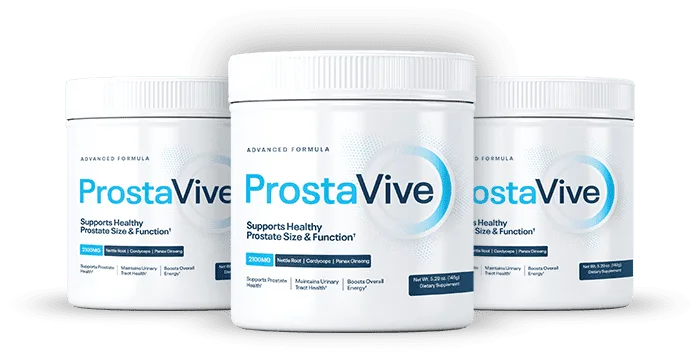
Part of our ProstaVive overview.
The ProstaVive ingredients label is detailed: 13 of its 14 active components carry an exact dose, and only a 200 mg blend hides its split. Most of those doses are below the amounts used in research, and three ingredients carry safety cautions.
What are the ProstaVive ingredients?
ProstaVive contains ten botanicals, five vitamins and minerals, and a 200 mg fruit and vegetable blend. The largest doses are fenugreek (500 mg), artichoke (300 mg), and ashwagandha, cordyceps and maca at 250 mg each. Stinging nettle root, the one ingredient tested for prostate symptoms, is 200 mg.[1]
It is a powder: one scoop of about 4.93 g a day, 30 servings per 148 g tub, which the vendor calls a "bottle". Other ingredients are natural flavors, citric acid, sea salt and stevia.[1]
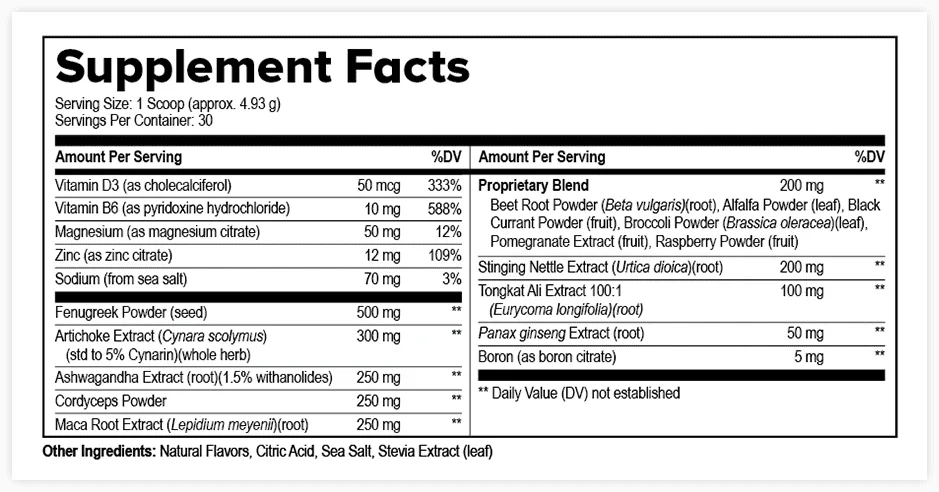
What does the ProstaVive ingredients label say, line by line?
Rows run from the largest dose to the smallest. Grades rate the research behind each vendor claim, not ProstaVive itself, because no trial of the product exists.
| Component | Amount on label | What it is | Dose used in studies | Evidence grade |
|---|---|---|---|---|
| Fenugreek | 500 mg | Seed powder, not an extract | 600 mg standardized extract[12] | Weak |
| Artichoke extract | 300 mg (5% cynarin) | "Whole herb" per label | Leaf extract[18] | Weak |
| Ashwagandha root extract | 250 mg (1.5% withanolides) | Adaptogen root | 600 mg or more[10] | Limited Avoid: hormone-sensitive prostate cancer |
| Cordyceps powder | 250 mg | Fungus, species not stated | 333 mg three times a day[19] | Weak |
| Maca root extract | 250 mg | Andean root | 1,500 or 3,000 mg[17] | Weak |
| Proprietary blend | 200 mg total | Six fruit and vegetable powders | 1 or 3 g pomegranate extract[30] | Weak |
| Stinging nettle root extract | 200 mg | Urtica dioica root | 450 mg[5] | Limited |
| Tongkat ali 100:1 extract | 100 mg | Eurycoma longifolia root | Not in the abstracts we read | Weak |
| Panax ginseng extract | 50 mg | Asian ginseng root | 900 mg three times a day[15] | Weak |
| Boron (citrate) | 5 mg | Trace mineral | 10 mg[21] | Weak |
| Zinc (citrate) | 12 mg (109% DV) | Mineral | No BPH trial found | Weak |
| Vitamin D3 | 2,000 IU (333% DV) | Vitamin | 2,000 IU[25] | Limited, mixed |
| Magnesium (citrate) | 50 mg (12% DV) | Mineral | No prostate data | Weak |
| Vitamin B6 | 10 mg (588% DV) | Vitamin | No benefit claimed | Not graded |
Study doses are daily amounts. Limited means some human data point toward a benefit, but the trials are few or small. Weak means human data are missing, null, or at very different doses. Our full method is on the how we review supplements page.
What does each active ingredient in ProstaVive do?
For the prostate itself, only nettle root has human trials. The other botanicals have no prostate study in people, or were tested for testosterone, sleep or cholesterol, usually at higher doses.
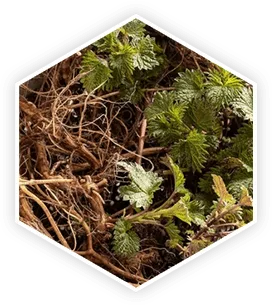
Stinging nettle root
Evidence: Limited
The vendor says nettle "promotes prostate health and healthy blood pressure".[2] The label gives 200 mg of root extract with no ratio.[1]
In a 620-man, 6-month trial, symptom scores fell from 19.8 to 11.8 on nettle versus 19.2 to 17.7 on placebo.[4] A 60-man trial of 450 mg a day for 12 weeks found an "intermediate effect".[5] A review said the benefit "remains to be established".[6] The vendor's only nettle reference for BPH is a 2-page letter.[3][32]
Tongkat ali
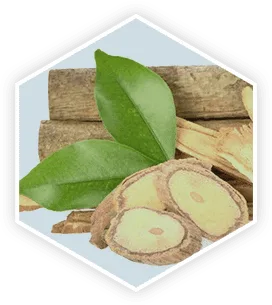
Prostate: Weak Testosterone: Limited
The vendor says tongkat ali "supports prostate health and prostate blood circulation".[2] We found no human prostate trial. For testosterone, a meta-analysis of 5 randomized trials found a rise and said "more research is required".[7] The "100:1" label ratio does not reveal the eurycomanone content. In one test, 26 of 100 Malaysian tongkat products exceeded the mercury limit.[8]
Ashwagandha
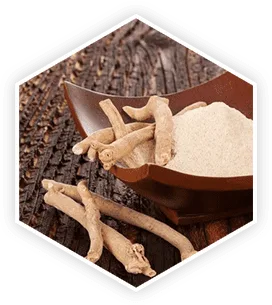
Evidence: Limited Avoid: hormone-sensitive prostate cancer
The vendor links ashwagandha to prostate health and says it "burns fat".[2] Here too we found no human prostate trial. NCCIH says some preparations "may be effective for insomnia and stress".[9] In 5 sleep trials, the bigger effect came at 600 mg a day or more;[10] ProstaVive has 250 mg. NCCIH also warns that "people with hormone-sensitive prostate cancer should avoid its use."[9]
Fenugreek
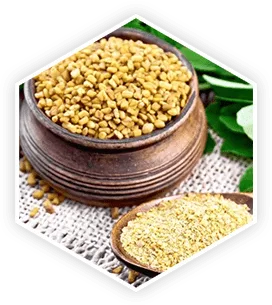
Evidence: Weak
The vendor says fenugreek's "furostanol saponins" support prostate function.[2] No human prostate trial turned up in our search. A 2026 meta-analysis found a small rise in total testosterone and rated certainty "very low".[11] A 120-man trial used 600 mg a day of a standardized extract;[12] ProstaVive uses 500 mg of plain seed powder, a different material.
Panax ginseng
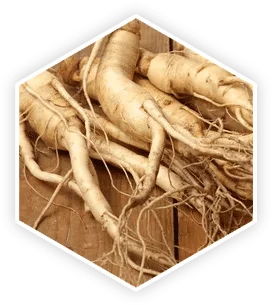
Evidence: Weak
The vendor says ginseng supports "healthy blood flow in the prostate".[2] We found no BPH trial. A Cochrane review of 9 trials and 587 men found a "trivial effect" on erectile function.[14] One trial used 900 mg three times a day;[15] ProstaVive's 50 mg is about 2% of that.
Maca
Evidence: Weak
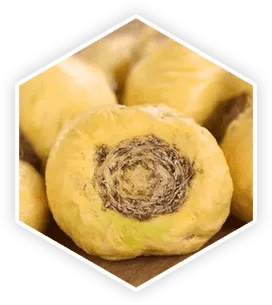
The vendor says maca "boosts prostate function".[2] The prostate data we found are from animals only. In a 12-week trial, 1,500 or 3,000 mg a day improved sexual desire in men without changing testosterone.[17] ProstaVive has 250 mg, with no extract ratio stated.
Artichoke
Evidence: Weak
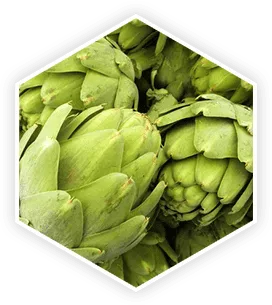
The vendor says artichokes "release oxytocin" and are "nature's very own aphrodisiacs".[2] We found no human evidence for either. Its research is on cholesterol: 9 trials and 702 people showed LDL down 14.9 mg/dL, using leaf extract rather than the label's "whole herb".[18]
Cordyceps
Evidence: Weak
Cordyceps powder (250 mg) is named on the front of the tub but missing from the sales-page ingredient list, and the species is not stated.[1][2] Our search found no prostate trial. A 20-person exercise pilot gave 333 mg three times a day for 12 weeks and saw one fitness marker rise.[19]
Boron
Evidence: Weak
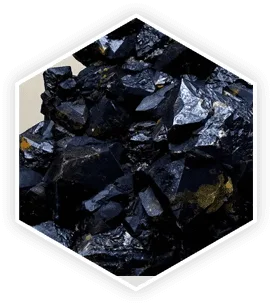
The vendor calls boron "one of the most powerful prostate boosters known to man".[2] We found no BPH trial, and in 35,244 men boron showed "no evidence for a preventive role" in prostate cancer.[20] An 8-man study of 10 mg a day raised free testosterone.[21] The adult upper limit is 20 mg.[22]
Zinc
Evidence: Weak
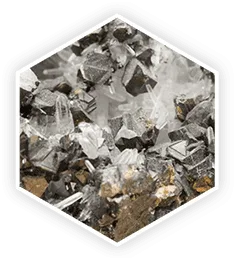
The vendor says zinc supports "better sleep and a healthy prostate".[2] We found no randomized trial of zinc for BPH. In 46,974 men, more than 100 mg a day was linked to advanced prostate cancer, while lower amounts were not.[23] ProstaVive's 12 mg is under the 40 mg upper limit.[24]
How do ProstaVive's doses compare with study doses?
Most are lower. Vitamin D is the one clear match, and that large trial found no bladder benefit. Nettle and ashwagandha sit below half the studied amount, while ginseng, maca and cordyceps fall far below.
| Ingredient | ProstaVive | Studied daily dose | How it compares |
|---|---|---|---|
| Stinging nettle root | 200 mg | 450 mg[5] | Less than half |
| Ashwagandha | 250 mg | 600 mg or more[10] | Less than half |
| Boron | 5 mg | 10 mg[21] | Half |
| Panax ginseng | 50 mg | 2,700 mg[15] | About 2% |
| Maca | 250 mg | 1,500 or 3,000 mg[17] | One sixth or less |
| Cordyceps | 250 mg | About 1,000 mg[19] | About a quarter |
| Vitamin D3 | 2,000 IU | 2,000 IU[25] | Same; no bladder benefit |
The front label prints "2100MG" beside nettle root, cordyceps and Panax ginseng.[1] That is the total of all ten botanicals, not the dose of those three. One scoop is the full daily serving; see how to take ProstaVive for the vendor's conflicting directions.
What is in the ProstaVive proprietary blend?
Six powders share 200 mg: beet root, alfalfa, black currant, broccoli, pomegranate extract and raspberry. The label gives no individual amounts, and the blend is missing from the sales-page list.[1]
The vendor says the formula supports "healthy nitric oxide levels".[2] Beet is the only plausible link: 16 trials found beetroot or nitrate lowered systolic blood pressure 4.4 mmHg, depending on dose.[31] Even if all 200 mg were pomegranate, it would be one fifth of the smallest dose in a pomegranate trial in men with rising PSA, which had no placebo arm.[30]
Which vitamins and minerals are in the ProstaVive formula?
Vitamin D3 2,000 IU, vitamin B6 10 mg, magnesium 50 mg, zinc 12 mg and boron 5 mg, plus 70 mg of sodium from sea salt.[1] Each sits below its US upper limit, though B6 needs a closer look.
Vitamin D. In 11,486 men in the VITAL trial, 2,000 IU a day did not lower the odds of overactive bladder.[25] A smaller trial of 50,000 IU every two weeks reported lower prostate volume and symptom scores.[29] The upper limit is 4,000 IU, so count other vitamin D sources.[26]
Magnesium. 50 mg is 12% of the Daily Value, well under the 350 mg limit for supplements.[27]
Are ProstaVive's ingredients safe?
Most doses are modest, but three ingredients need care: ashwagandha for men with hormone-sensitive prostate cancer, fenugreek for blood sugar and allergy, and ginseng for clotting. The vendor says ProstaVive "contains no known allergens" and is "not a stimulant".[1] Our sources do not fully support either.
| Ingredient | What our sources say | Who should ask a doctor first |
|---|---|---|
| Ashwagandha | Drowsiness, stomach upset; rare liver injury[9] | Hormone-sensitive prostate cancer (avoid); thyroid or autoimmune disease; upcoming surgery |
| Fenugreek | "Can cause allergic reactions, including serious reactions"; large doses may drop blood sugar[16] | Diabetes medicine users; food allergies |
| Panax ginseng | Insomnia most common; may "interfere with blood clotting"[33] | Blood thinner users; diabetes |
| Tongkat ali | Mercury above limits in 26 of 100 products[8] | Men with prostate cancer, given its testosterone claim |
| Nettle root | Adverse event risk "very low"[6] | Interactions not in our sources |
| Vitamin B6 | Near the European 12 mg limit[13] | Multivitamin users |
| Zinc | Interacts with quinolone and tetracycline antibiotics[24] | People on those antibiotics |
We found no safety data for maca, artichoke or cordyceps.
Urinary symptoms can also come from bladder problems, infections, prostatitis or prostate cancer, so NIDDK advises discussing any urinary symptoms with a health care professional. Get care right away if you cannot urinate at all, see blood in your urine, or have painful, urgent urination with fever and chills.[34]
More detail is in ProstaVive side effects.
Which prostate ingredients are not in ProstaVive?
Saw palmetto, beta-sitosterol, pygeum, pumpkin seed and lycopene are all absent,[1] so research on them says nothing about ProstaVive. For context on the best known, read saw palmetto for prostate health.
Do the ingredients prove ProstaVive works?
No. Ingredient studies show what one compound does at a known dose, not what 14 components at mostly lower doses do in one scoop. None of the vendor's 34 references tests ProstaVive.[3] We weigh the full picture in does ProstaVive work.
On October 2, 2026, we read the vendor's label, sales and reference pages, checked each study on PubMed, and added NCCIH and NIH Office of Dietary Supplements guidance, the latter from archived copies because the live pages blocked us. We received no free product.
What is our take on the ProstaVive formula?
Mixed: an honest label, but most doses are below what studies used. Thirteen exact doses let anyone check the research, but the one prostate ingredient is under-dosed, the hormone-related herbs carry cautions, and no trial tests the powder.
Judged by our how we review supplements method, ProstaVive has an honest label but most doses are below what studies used. Our prostate health guides cover the wider picture, and the ProstaVive overview covers price, refunds and the full verdict.
Frequently asked questions
What are the main ingredients in ProstaVive?
The largest doses are fenugreek seed powder 500 mg, artichoke extract 300 mg, and ashwagandha, cordyceps and maca at 250 mg each. Stinging nettle root is 200 mg, tongkat ali 100 mg and Panax ginseng 50 mg, plus vitamins, minerals and a 200 mg blend.
Does ProstaVive contain saw palmetto?
No. Saw palmetto is not on the ProstaVive label, and neither are beta-sitosterol, pygeum, pumpkin seed or lycopene. Research on those ingredients cannot be used to judge ProstaVive. Its only ingredient with prostate symptom trials is stinging nettle root.
Is the ProstaVive formula a proprietary blend?
Mostly not. The label gives an exact dose for 13 of its 14 active components. Only one line is a proprietary blend: 200 mg shared by beet root, alfalfa, black currant, broccoli, pomegranate and raspberry, with no individual amounts.
Is the stinging nettle dose in ProstaVive enough?
It is lower than studied. ProstaVive has 200 mg of nettle root extract with no stated ratio, while a 12-week trial used 450 mg a day. Whether 200 mg of this extract does anything has not been tested.
Who should not take the ingredients in ProstaVive?
Men with hormone-sensitive prostate cancer, because NCCIH says they should avoid ashwagandha. Ask a doctor first if you take blood thinners or diabetes medicine, have thyroid or autoimmune disease, or already take a multivitamin with vitamin B6.
Sources
- ProstaVive contact page and Supplement Facts. prostavive.org, undated (read October 2, 2026).
- ProstaVive home page. prostavive.org, undated (read October 2, 2026).
- ProstaVive references. prostavive.org, undated (read October 2, 2026).
- Safarinejad: nettle root in 620 men with BPH. PubMed, 2005 (read October 2, 2026).
- Karami: nettle root in 60 men. PubMed, 2020 (read October 2, 2026).
- Chrubasik: nettle root review. PubMed, 2007 (read October 2, 2026).
- Tongkat ali and testosterone, 5 trials. PubMed abstract (read October 2, 2026).
- Mercury in Malaysian tongkat ali products. PubMed abstract (read October 2, 2026).
- Ashwagandha. NCCIH, March 2023 (read October 2, 2026).
- Ashwagandha and sleep, 5 trials. PubMed abstract (read October 2, 2026).
- Fenugreek and testosterone meta-analysis. PubMed, 2026 (read October 2, 2026).
- Standardized fenugreek extract in 120 men. PubMed abstract (read October 2, 2026).
- EFSA: upper intake level for vitamin B6. PubMed, 2023 (read October 2, 2026).
- Cochrane: ginseng for erectile dysfunction. PubMed, 2021 (read October 2, 2026).
- Hong: Korean red ginseng trial. PubMed, 2002 (read October 2, 2026).
- Fenugreek. NCCIH, February 2025 (read October 2, 2026).
- Gonzales: maca and sexual desire. PubMed, 2002 (read October 2, 2026).
- Artichoke and blood lipids, 9 trials. PubMed abstract (read October 2, 2026).
- Chen: Cordyceps Cs-4 in older adults. PubMed, 2010 (read October 2, 2026).
- Boron and prostate cancer, VITAL cohort. PubMed abstract (read October 2, 2026).
- Naghii: boron in 8 men. PubMed, 2011 (read October 2, 2026).
- Boron fact sheet. NIH Office of Dietary Supplements, June 9, 2022 (read October 2, 2026).
- Leitzmann: zinc supplements and prostate cancer. PubMed, 2003 (read October 2, 2026).
- Zinc fact sheet. NIH Office of Dietary Supplements, January 6, 2026 (read October 2, 2026).
- VITAL: vitamin D and bladder symptoms in men. PubMed abstract (read October 2, 2026).
- Vitamin D fact sheet. NIH Office of Dietary Supplements, June 27, 2025 (read October 2, 2026).
- Magnesium fact sheet. NIH Office of Dietary Supplements, January 6, 2026 (read October 2, 2026).
- Vitamin B6 fact sheet. NIH Office of Dietary Supplements, June 16, 2023 (read October 2, 2026).
- Zendehdel: high-dose vitamin D in BPH. PubMed, 2021 (read October 2, 2026).
- Paller: pomegranate extract and PSA. PubMed, 2013 (read October 2, 2026).
- Beetroot, nitrate and blood pressure. PubMed abstract (read October 2, 2026).
- Ghorbanibirgani: nettle letter. PubMed, 2013 (read October 2, 2026).
- Asian Ginseng. NCCIH, February 2025 (read October 2, 2026).
- Enlarged Prostate (BPH). NIDDK, June 2024 (read October 2, 2026).
This page is general information, not medical advice. Dietary supplements are not reviewed by the FDA for safety or effectiveness before they are sold and are not intended to diagnose, treat, cure or prevent any disease. Talk to your doctor before taking any supplement, especially if you are pregnant, nursing, take medication or have a health condition.